
Fuel & Fluid Systems
Fuel Slosh Testing
Dynamic slosh and permeation testing of fuel storage tanks for aircraft, automotive, military, and off-road applications.
01 · UNDERSTAND THE SERVICE
Overview
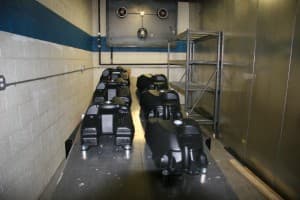
Sterling Performance provides fuel slosh testing for aircraft, automotive, military, and off-road ATV and motorcycle tanks to determine the capability and permeation of your tanks.
We test the ability of your parts to withstand, overcome, and contain the dynamic movement of liquid within your fuel tanks — and we can test slosh with any fuel. After the slosh test, we can measure permeation and evaporative emissions and your ability to meet EPA and CARB specifications.
02 · CONFIRM THE FIT
Fuel Slosh Testing Capabilities
- Tank aging
- Fuel slosh testing
- Pressure / vacuum cycling
- Fill testing, filler tube
- Drop tests
- Thermal cycling, temperature testing
- Thermal shock testing
- Mechanical shock testing and vibration testing
- Permeation, evaporative emission, helium leak testing
- Carbon canister testing — load and purge cycles and loads
03 · METHODS & CONDITIONS
Testing Methods & Conditions
- 01Dynamic slosh testing with any fuel
- 02Post-slosh permeation and evaporative emissions measurement
- 03Tank aging, pressure/vacuum cycling, fill and drop testing
- 04Thermal cycling and thermal shock
- 05Mechanical shock, vibration, and helium leak testing
04 · REAL-WORLD FIT
Typical Applications & Assemblies
- Fuel storage tanks
- Aircraft, automotive, military, and off-road tanks
Reporting & Compliance Data
Sterling delivers professional, concise, and accurate test reports backed by state-of-the-art data acquisition. Our reports are detailed enough to be submitted as engineering and government compliance backup data — so you get results you can act on and document.
ANSWERS FOR ENGINEERS
Frequently Asked Questions
What tanks can Sterling slosh test?
Aircraft, automotive, military, and off-road ATV and motorcycle fuel tanks — with any fuel.
Can you measure permeation after a slosh test?
Yes. We measure permeation and evaporative emissions after the slosh test against EPA and CARB specifications.
Fuel Slosh Testing inquiry
Ready to define the scope?
Share the part or system, requirement, operating conditions, and desired outcome. Sterling's team will use that context to begin reviewing the appropriate testing approach.